Background
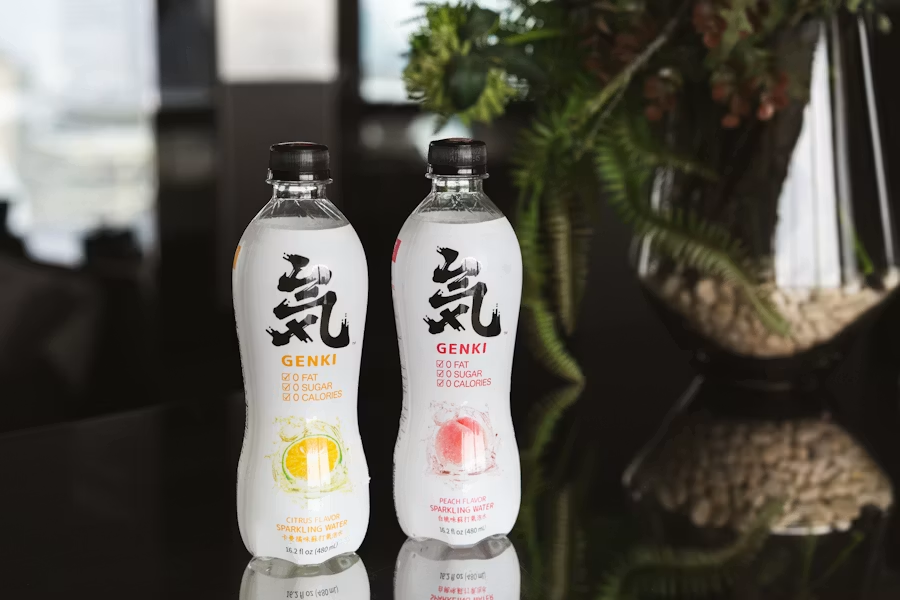
Genki Forest is one of the fastest-growing beverage brands in Asia, built on a simple advantage over slower incumbents: it decides with data, not opinion. Its portfolio spans sparkling water, tea drinks, dairy beverages, fiber tea, and functional electrolyte water, sold across a large regional market and exported to more than 40 international markets, including the United States and Australia.
In fast-moving consumer goods, that advantage is worth money. Consumer preferences shift in weeks, retail channels are fragmented across tens of thousands of outlets, and a product's window to win is short. A brand that reads the market faster launches more winners, kills losers sooner, and spends less proving both. Genki Forest's edge was never a single flavor — it was a system that turns market signal into frontline action faster than the competition.
Since 2022, Genki Forest has partnered with ShareCRM to build that system into its channel operations — turning CRM from a customer database into the operating layer its sales and distributor network runs on every day.
The Challenge
Genki Forest learned the cost of building the wrong system the hard way.
Early in its digital transformation, the company invested heavily in a self-built store-visit platform. It didn't work. The system sat too far from what frontline reps actually did, and it couldn't solve the real problems of retail execution. Leadership made what its CIO called the most painful decision of the program: scrap a system it had spent significant time and budget developing, and start over.
That failure reset the company's entire buying logic. As CIO Xiaofeng Huang put it, every system does two things — take data in, and push data out — and the product that does both most accurately is the one worth adopting. Genki Forest would build only where it could create unique advantage, and buy proven products everywhere else, so its own engineers stayed focused on what actually differentiated the business.
For a CRM at FMCG scale, "proven" had to survive a demanding list of realities:⊗ Long channel chains running brand → distributor → retailer → consumer ⊗ A large distributor network and tens of thousands of fragmented outlets ⊗ High-frequency store-visit and merchandising tasks across the field ⊗ Expense workflows spanning budget, execution, and reimbursement ⊗ Smart-cooler and equipment deployment to manage in the field ⊗ A demand for complete, real-time, traceable channel data.
The bar was not "does it have the features." The bar was whether thousands of reps and distributors would actually use it — and whether the business would move because they did.
The Solution
Genki Forest chose ShareCRM to build a data-driven operating layer for channel operations, retail execution, and AI-powered field sales.
The first result its leadership cared about was time-to-value. ShareCRM went live in 100 days — for a deployment of this profile, that is fast. Enterprise CRM programs of comparable scope — cross-functional rollout, heavy customization, integration with legacy systems, and an AI layer — commonly run 6 to 12 months or longer.¹ Genki Forest reached a working, company-wide system in roughly a third of that window, fast enough that the rollout supported the company's next expansion cycle instead of holding it back. By combining ready-to-use SaaS applications with PaaS customization, ShareCRM integrated with Genki Forest's existing self-built systems and established standardized master data across every channel and customer. The payoff wasn't "a system launched" — it was a single, reliable operating surface that thousands of frontline users could trust for daily work from day one.
The build then delivered four operating modules together, in one deployment rather than four sequential projects:
◆ Channel management — refined distributor and outlet management, so headquarters can see and steer the entire network, not just its largest accounts
◆ Store visits — standardized route, visit, display, and execution workflows, turning field activity from unverifiable self-reporting into structured, data-backed execution
◆ Expense control — full-process management from budget to reimbursement to analysis, tightening ROI on every trade-marketing dollar
◆ Equipment management — smart-cooler access, placement, unbinding, and lifecycle workflows, so deployed assets stay accounted for and productive.
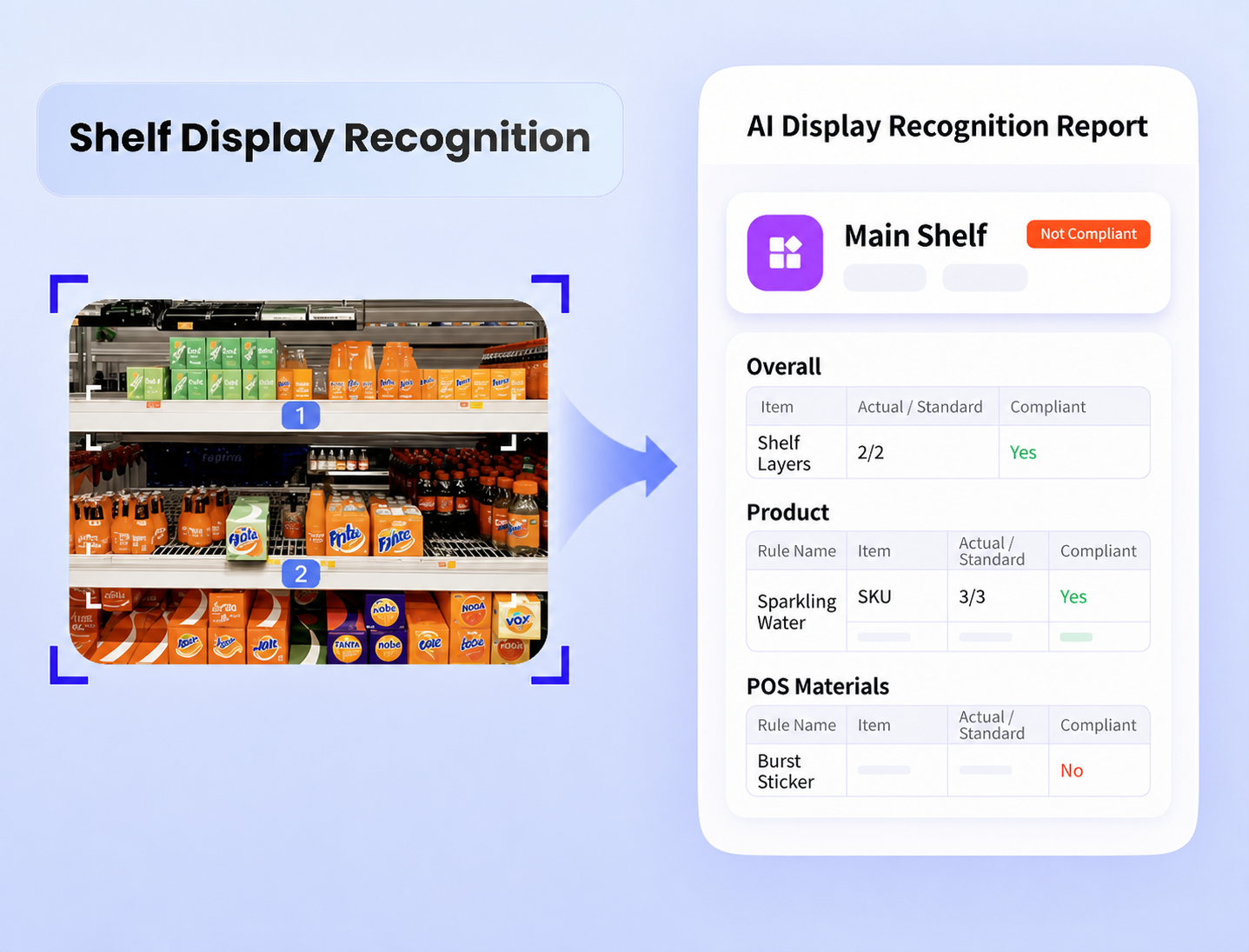
Figure: AI-assisted display recognition turns shelf photos into compliance reports, helping field teams verify shelf layers, SKU presence, and POS materials in seconds.
For a buyer, the store-visit system is the clearest illustration of the payoff. In 45 days, ShareCRM built what became a benchmark store-visit system for the consumer-goods industry, with AI-assisted display recognition that returns results in seconds. Practically, that means a rep verifies shelf compliance in the time it takes to photograph a display — and a manager sees confirmed execution data across the field instead of waiting on paperwork. Every minute a rep isn't spending on manual reporting is a minute back on selling and coverage.
Adoption was treated as non-negotiable, because at this scale usability is the business case. The system would be used by thousands of frontline salespeople and distributors, where a single friction point turns into mass complaints and stalled rollout. Genki Forest's standard, in the words of its information-center lead, was blunt: if something can be done in one second, it shouldn't take two; if it can be done in one step, it shouldn't take two. ShareCRM's field understanding and delivery was held to that bar.
The Results
With ShareCRM, Genki Forest turned CRM into a practical operating layer — and gave its leadership a faster, more connected foundation for FMCG channel operations:
✓ CRM live in 100 days — roughly a third of the 6-to-12-month timeline typical of comparable enterprise CRM programs¹ — integrated with existing systems and ready to support the next expansion cycle
✓ Store-visit system live in 45 days, now an industry benchmark
✓ AI display recognition in seconds, replacing manual shelf-compliance checks
✓ Thousands of daily frontline users operating on one standardized system
✓ Four operating modules — channel, store visits, expense, equipment — delivered in a single deployment
✓ Standardized master data established across every customer and channel.
The strategic payoff is bigger than any single metric. Genki Forest had already shown what data-driven decisions are worth — launching 12 sparkling-water flavors in a single year and letting market performance, not boardroom opinion, decide which stayed and which exited. A stronger channel-data and retail-execution foundation extends exactly that capability: the company reads the market faster, and acts on what it reads with less lag and less waste.For the field, the shift is felt as capacity. Standardized store-visit workflows and second-level display recognition strip out the manual reporting that used to eat into selling time — freeing reps to spend that time on coverage and follow-up instead. For distributors and channel partners, a more connected foundation means better collaboration and cleaner data. For Genki Forest's digital-operations team — which owns business outcomes like sell-through, inventory turnover, and channel coverage, not just system uptime — it means the operating layer finally serves the number, not the other way around.
Conclusion
Genki Forest's CRM journey shows what changes when a consumer-goods company stops buying tools and starts building an operating system: channel data, frontline execution, expenses, equipment, and decisions connect into one repeatable model that gets faster the more the business uses it. That is the foundation Genki Forest now runs on — and expands on.
Ready to turn CRM into the operating layer your channel actually runs on?Talk to a ShareCRM specialist →
¹ Software Advice, an analyst firm owned by Gartner, reports that large-enterprise CRM deployments average 9 to 12 months; independent benchmarks for cross-functional, heavily customized enterprise CRM programs consistently fall in the same 6-to-12-month range.