Technology Is the Starting Point. Growth Is the Destination.
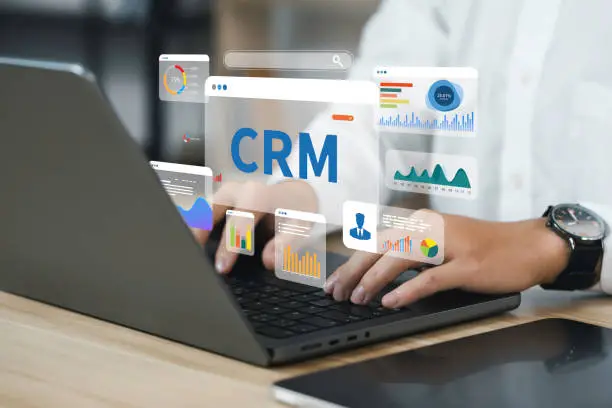
In today’s manufacturing landscape, advanced technology alone is no longer enough to drive sustainable growth. As competition intensifies and products become increasingly similar, differentiation depends on how well companies translate customer pain points into measurable business outcomes.This shift is pushing manufacturers away from traditional product-led sales toward solution-oriented models—where value is defined not by specifications, but by impact. In this transformation, CRM is evolving from a sales system into a core platform that connects customer needs with real operational and financial results.
Industry Shift: From Automation to End-to-End Autonomy
Manufacturing digitalization is entering a new phase. Industrial AI and intelligent agents are enabling faster decision-making across production, quality control, and supply chains. At the same time, companies are moving in two directions: large enterprises deepen vertical capabilities for complex scenarios, while mid-sized manufacturers adopt lightweight SaaS platforms to stabilize efficiency without heavy upfront investment.Most importantly, commercial models are changing. Instead of selling equipment or licenses, manufacturers increasingly sell outcomes—such as yield improvement, cost reduction, or delivery reliability. This requires systems that can track, quantify, and deliver value continuously.
The Core Challenge: When Technical Excellence Fails to Create Business Value
Despite strong engineering capabilities, many manufacturers struggle to connect technology with commercial results.Customer requirements captured in CRM systems often remain disconnected from engineering and execution platforms. Technical parameters—precision, speed, flexibility—are difficult to translate into business indicators like delivery performance, margin improvement, or risk reduction.Fragmented tools make the problem worse. Sales, engineering, and operations teams rely on separate systems, forcing manual coordination that slows response times and increases errors. As customization grows, complexity becomes a bottleneck rather than a competitive advantage.
Crossing the Gap: From Components to Solutions
True solution selling requires a fundamental shift in how value is communicated and delivered.Instead of promoting features, organizations must express solutions in business terms—how a configuration reduces rework, shortens lead time, or lowers total cost. CRM becomes the system where this translation happens, structuring customer context, constraints, and objectives into executable logic.When CRM is connected with PLM and ERP, solution generation accelerates dramatically. What once took days of manual coordination can be completed in minutes through system-driven validation, pricing, and feasibility checks—even in highly complex, multi-configuration environments.
ShareCRM’s Approach: Rebuilding Value from Customer Pain Points
ShareCRM positions CRM as the commercial anchor of the value chain.Customer parameters captured in CRM drive dynamic BOMs, supply chain instructions, production execution, and delivery tracking. Requirements are no longer static inputs—they become real-time drivers across the organization.Industry know-how is embedded into the system through rule libraries and constraint models, preventing invalid configurations and reducing reliance on individual expertise. Sales-facing BOMs are simplified for speed and clarity, while engineering and production layers retain full technical depth.Through API-based integration, CRM, PLM, and ERP collaborate in real time, ensuring that customer commitments are immediately reflected in cost, capacity, and delivery schedules.
From Cost Center to Growth Engine
By integrating commercial strategy (CRM), technical validation (PLM), and real-time execution (ERP), manufacturers achieve tangible results:
- Faster solution design and pricing
- Fewer errors and rework
- Better inventory control and lower risk
- Stronger margins through outcome-based positioning
- Improved compliance and traceability
More importantly, organizations build a repeatable system for scaling complexity—without sacrificing speed or customer experience.
The Future of Solution Selling
Manufacturing competitiveness is no longer defined by what a company can produce, but by what customer problems it can reliably solve.CRM is the digital foundation that makes this shift operational—connecting customer intent with execution across design, production, delivery, and service. When every promise is traceable, executable, and measurable, solution selling becomes scalable.In the next phase of industrial competition, parameters don’t just describe products. They define value.