Introduction: Service Is No Longer a Back-Office Function
In today’s B2B environment, service is no longer just about solving problems after a sale. It plays a critical role in customer satisfaction, retention, and long-term revenue.
However, many organizations still manage service through disconnected tools—one system for tickets, another for field scheduling, spreadsheets for spare parts, and emails for coordination. The result is slow response times, inconsistent execution, and limited insight into service performance.
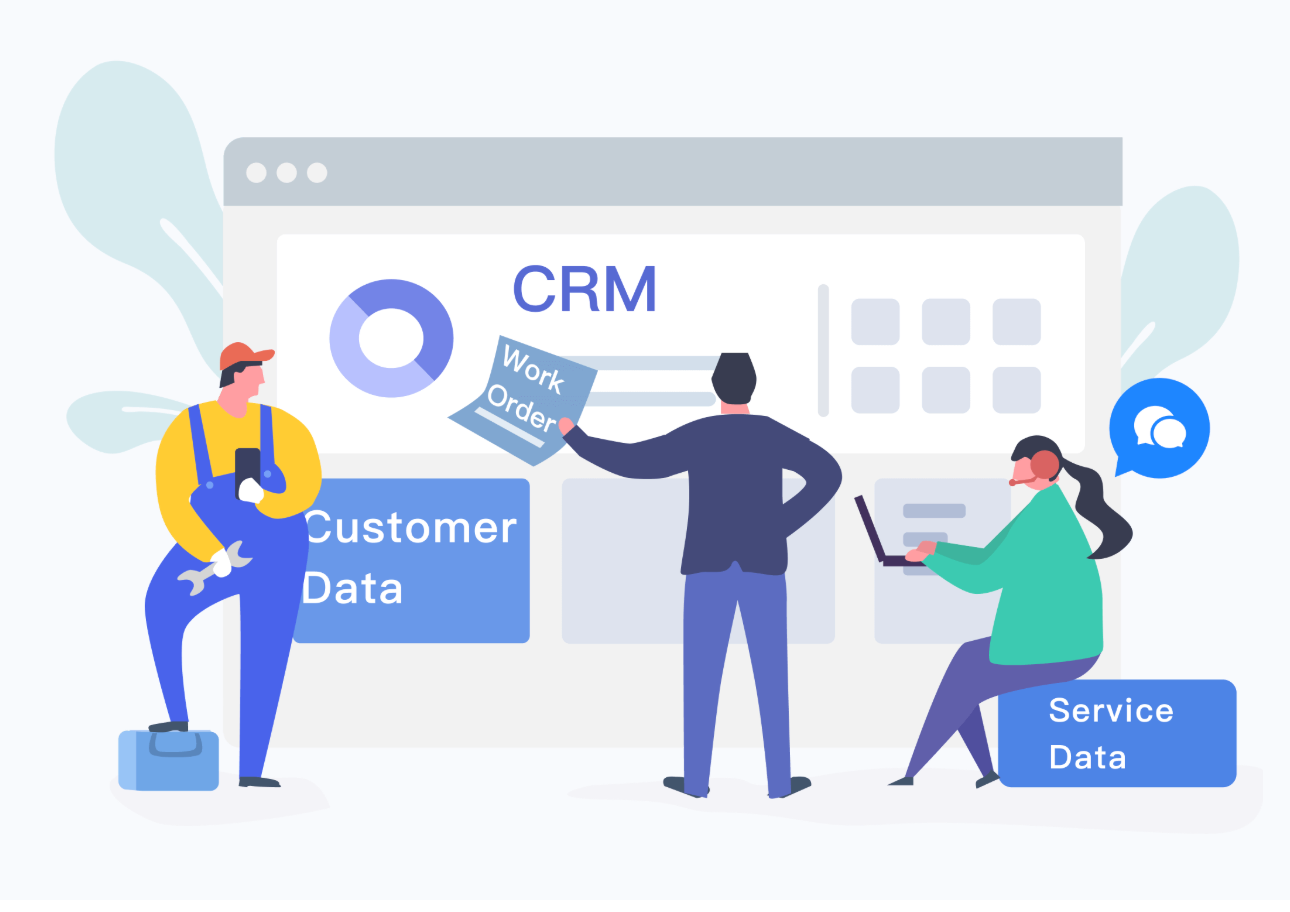
To meet modern service expectations, enterprises need a unified system that connects customer requests, internal teams, field technicians, and service data in real time.
One Platform for the Entire Service Lifecycle
ShareCRM Service Management is designed to support end-to-end service operations, from the moment a customer submits a request to on-site execution and post-service analysis.
Instead of treating service as a standalone function, the platform integrates service workflows directly into the broader CRM environment—ensuring customer context, operational coordination, and performance data remain connected.
Unified Case Management Across Multiple Channels
Customers reach out through many touchpoints: web forms, call centers, messaging apps, or social platforms. ShareCRM centralizes service requests from all supported channels into a single case management system.
Each case automatically captures customer details, service history, and relevant product information, giving service agents full context from the start. This reduces back-and-forth communication and improves first-response accuracy.
Integrated knowledge bases and expert collaboration tools further support agents in resolving issues efficiently and consistently.
AI-Assisted Service for Faster Resolution
AI capabilities are embedded throughout the service workflow to reduce manual effort and improve response quality.
AI chatbots provide 24/7 support for common inquiries, while AI-generated summaries help agents quickly understand customer issues, previous interactions, and relevant documentation. Intelligent search functions surface historical cases, product manuals, and troubleshooting steps in seconds.
By augmenting service teams with AI assistance, organizations can scale service operations without sacrificing quality.
Smart Scheduling and Resource Allocation
For on-site and field service scenarios, ShareCRM offers flexible scheduling and dispatch capabilities.
Service orders can be assigned manually or automatically based on predefined rules such as location, skill set, availability, or service priority. Visual tools—including Gantt charts and map-based views—make it easy to balance workloads and optimize response times.
This ensures the right technician reaches the right customer at the right time, improving both efficiency and service outcomes.
Standardized Field Service Execution
Consistency is critical in field service operations. ShareCRM supports standardized service processes through configurable service levels (SLAs), structured work orders, and mobile-friendly technician interfaces.
Field staff can record service actions in real time, capture photos, scan QR codes, and track spare parts usage directly on site. Inventory, labor, and service costs are automatically linked to each service order, creating accurate and transparent records.
This standardization reduces errors, improves compliance, and strengthens service quality across regions and teams.
Equipment and Maintenance Management
For industries such as manufacturing, energy, and infrastructure services, equipment performance is closely tied to service outcomes.
ShareCRM enables enterprises to maintain complete equipment profiles, including maintenance history, inspection records, and service schedules. QR code scanning allows technicians to access equipment data instantly on site, while preventive maintenance plans help reduce downtime and unplanned failures.
By connecting assets directly to service workflows, organizations gain better control over both reliability and cost.
Data-Driven Service Insights and Optimization
Service data only creates value when it leads to better decisions. ShareCRM provides configurable dashboards and analytics that offer visibility into key service metrics such as response time, resolution rate, customer satisfaction, technician performance, and service cost.
Managers can identify bottlenecks, evaluate SLA compliance, and optimize resource allocation based on real operational data—not assumptions.
These insights support continuous improvement and help service teams align performance with business objectives.
Conclusion: Turning Service into a Competitive Advantage
Modern service operations demand speed, consistency, and intelligence. Fragmented tools and manual coordination can no longer keep pace with customer expectations.
ShareCRM Service Management brings customer support, field execution, AI assistance, and analytics into a unified platform—helping enterprises deliver reliable service experiences while improving operational efficiency.
When service processes are connected, standardized, and measurable, service becomes more than a cost center. It becomes a strategic driver of customer trust, retention, and long-term growth.